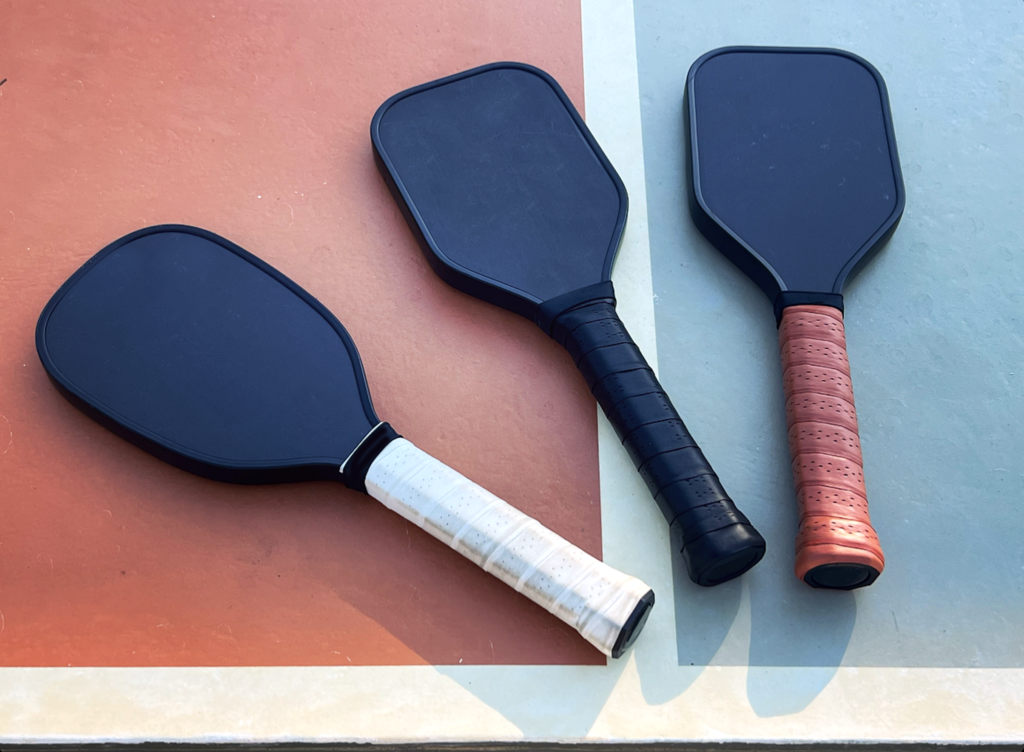
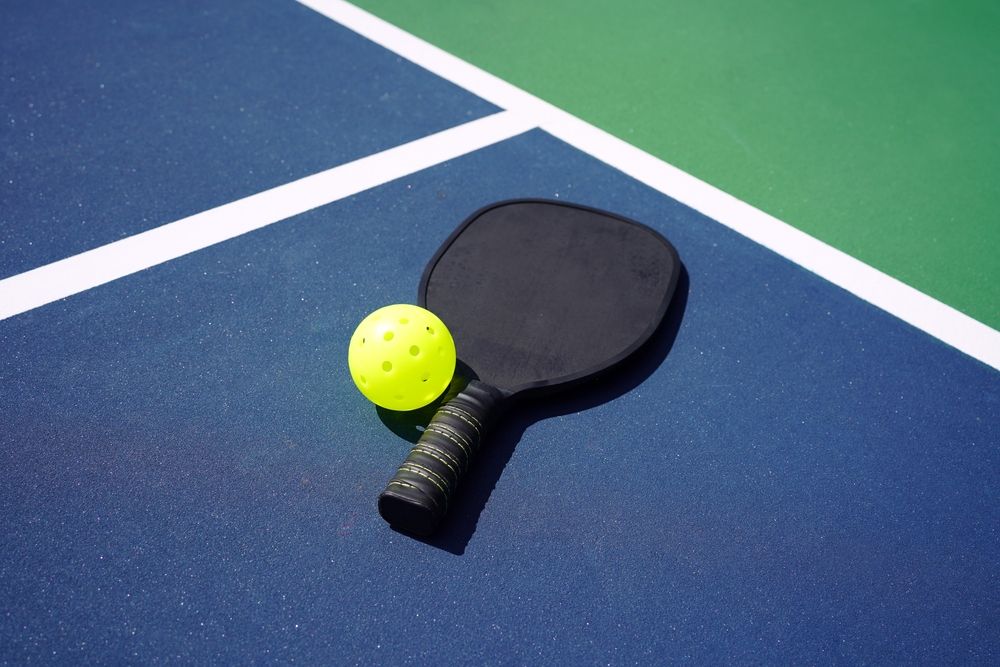
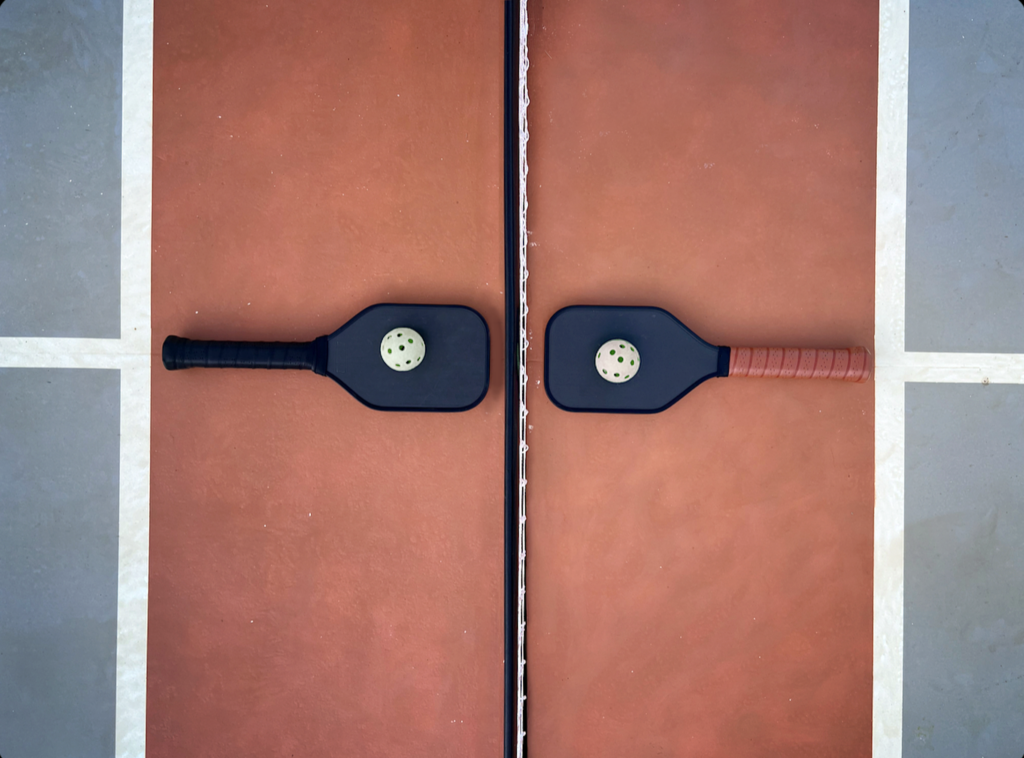
Deck Pickleball is a variant of the paddle sport widely known and popular as pickleball. Like its predecessor, deck pickleball combines elements of tennis, badminton, squash and table tennis but primarily retains its common kinship with pickleball. It’s played on a raised platform known as a “deck” which is roughly twice the size of a table tennis / ping-pong table and one-tenth the size of a standard pickleball court. Like pickleball, it employs a low net, uses a perforated plastic ball, and requires paddles slightly smaller than the types used in pickleball but larger than those used in ping-pong. The game can be played in the singles or the doubles format, with doubles being the most popular.
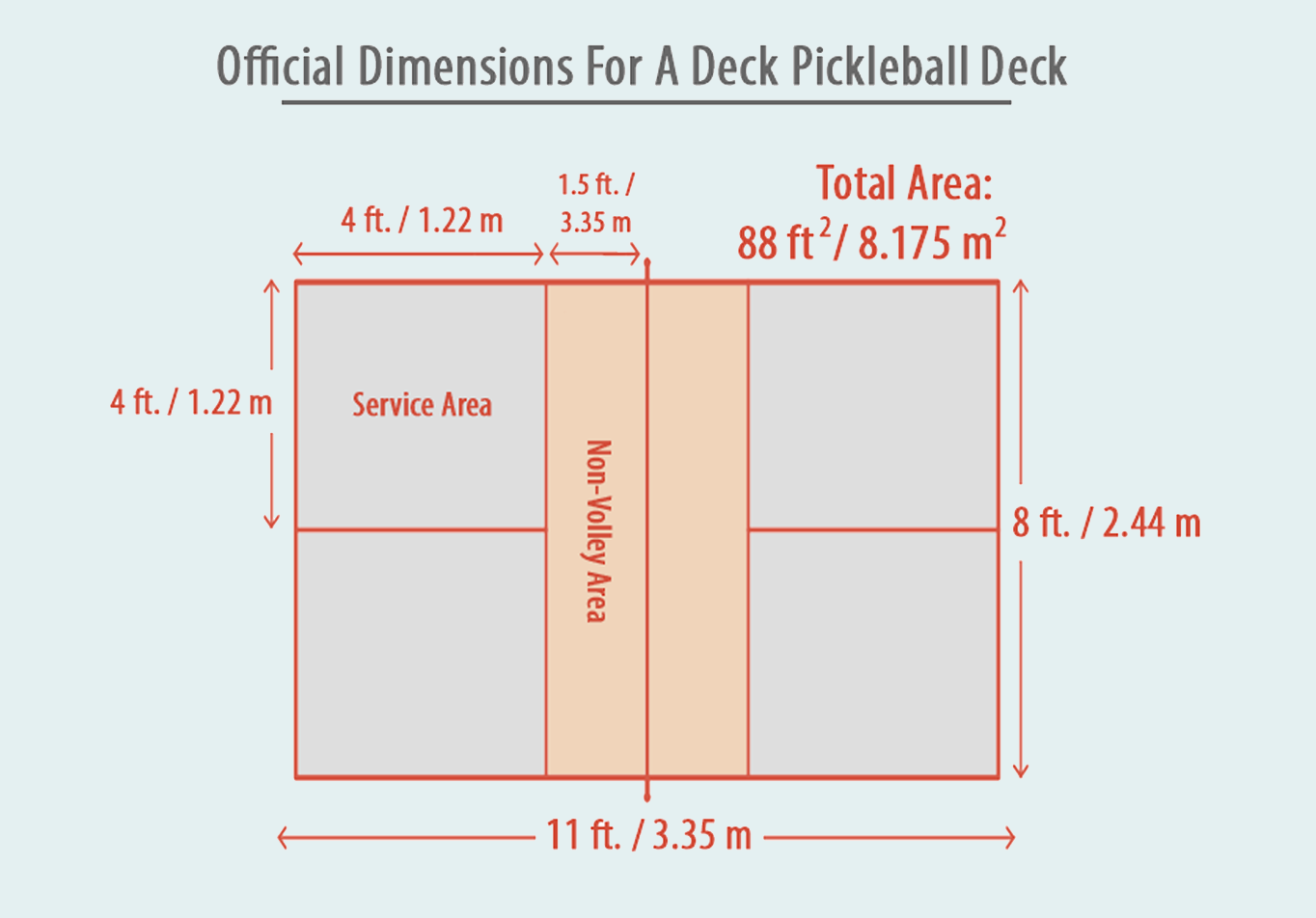
Deck Pickleball decks are the official rectangular surface areas of play in the sport with two player sides divided by a central net. The court is divided into three main areas; two opposing service areas for play, and the center non-volley zone where the net is located. The service areas are split, with a left and right side divided by a centerline. Like standard pickleball, the non-volley zone is not used for volleying, and players must hit the ball from outside the zone in order to serve and rally. The rapid back-and-forth rallies between opposing players typically have a cadence much more akin to that of table tennis.
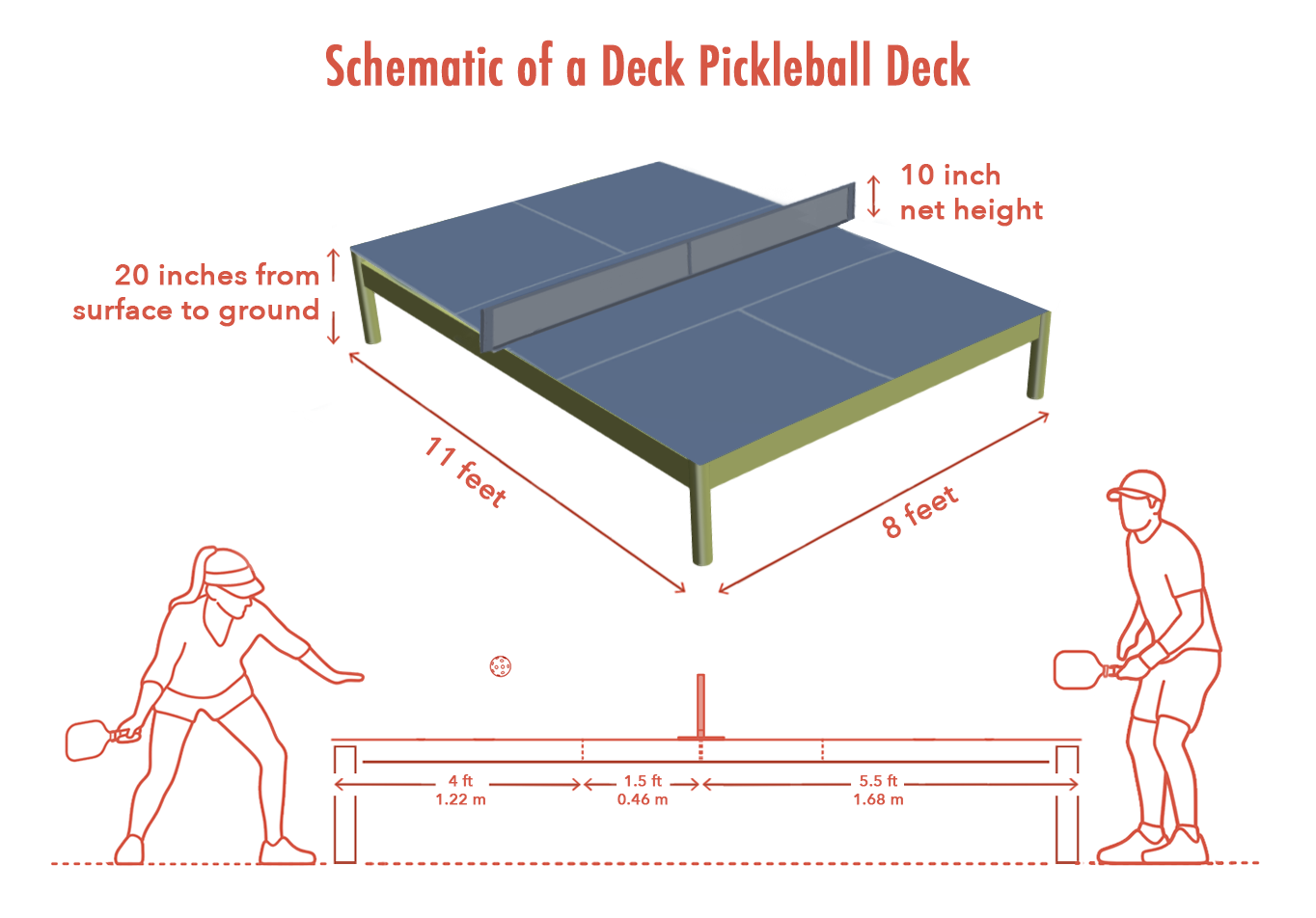
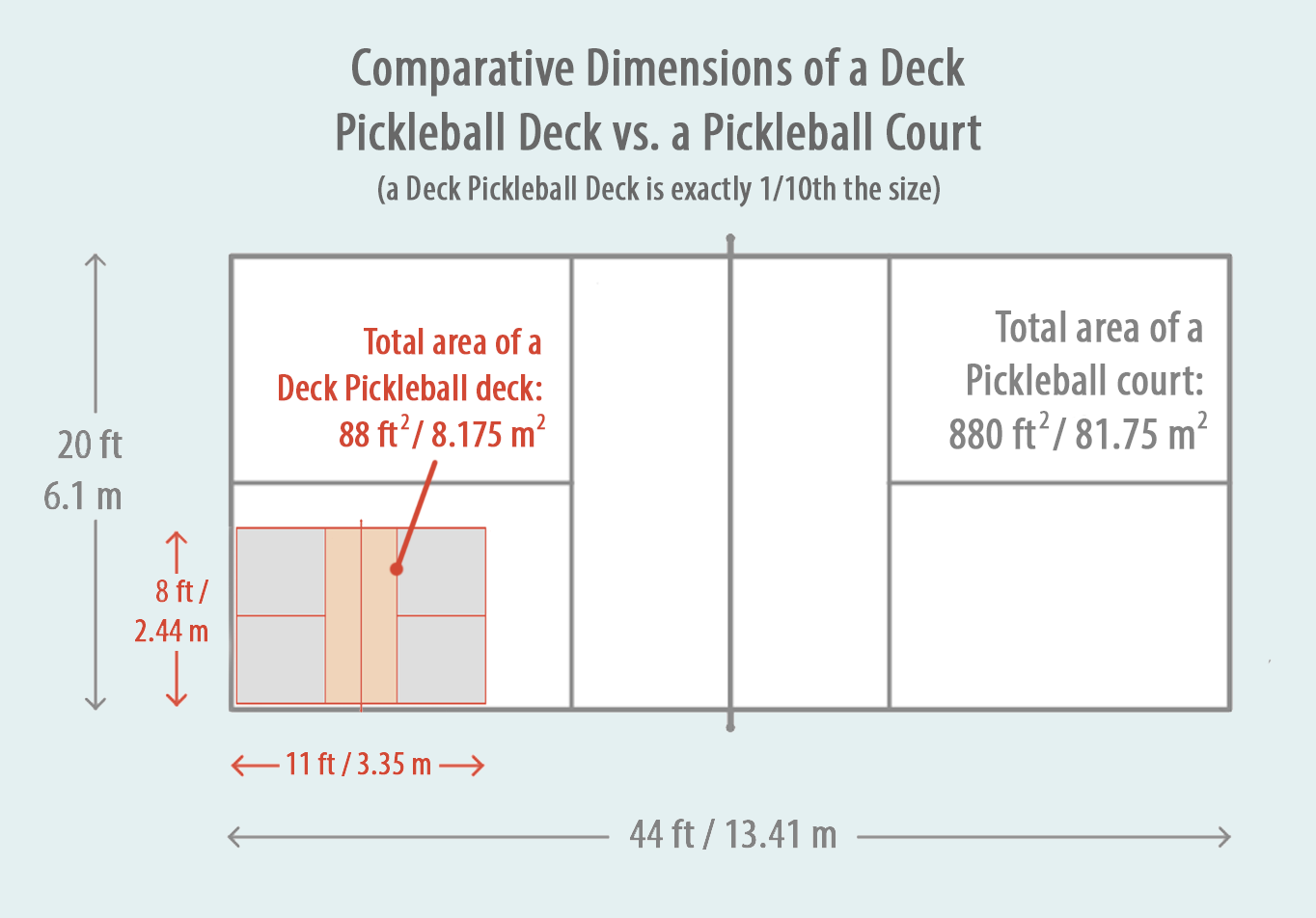
Deck pickleball decks have an overall length of 11 feet (3.35 m), width of 8 feet (2.44 m) and have a total area of 88 ft² (8.175 m²). The Non-Volley Line is located 1.5 feet (0.46 m) perpendicular from the net at the center of the deck, marking the edge of the service area. The recommended clearance for a deck should be 20 inches (50.8 cm) off the ground with the net set at approximately 10 inches (25.4 cm) from the surface of the deck. The net should also have approximately 3 – 5 inches (7.6 – 12.7 cm) of overlapping coverage on both sides of the deck.
Deck Pickleball dimensions at a glance:
Total Deck Width: 8 ft | 2.44 m Total Deck Length: 11 ft | 3.35 m Total Area: 88.0 ft² | 8.175 m²
Non-Volley Line Setback: 1.5ft | 0.46 m Service Area Length: 4 ft | 1.22 m Service Area Width: 4 ft | 1.22 m Line Width: 1.25 in | 3.175 cm Net Height: 10 in | 25.4 cm Deck Clearance (from ground): 20 in | 50.8 cm Surface Materials: Particleboard, medium-density fiberboard (MDF), or plywood are most common for indoor decks; laminate or aluminum can be used for outdoor decks
OUR PROGRAMS
CONTRASTING DECK PICKLEBALL AND PICKLEBALL
Apart from surface differences (one sport being played on an elevated deck as opposed to a court) deck pickleball (deckpickle) and pickleball are both very similar sports. However, they also differ in terms of speed, playing style, and physical requirements.
MEN TRAINING
Speed of Play
Deck Pickleball is generally considered a faster-moving sport compared to traditional pickleball. Like pickleball, the ball can travel at high speeds, with top players often hitting the ball at speeds exceeding 50-60 miles per hour. However, the shorter distance between players (due to the size of the table) and the rapid exchange of rallies makes for improved, often quicker reflexes and fast decision-making. Rallies in deck pickleball can be incredibly fast-paced and require quick movements and precise control.
Deckpickle requires quick reflexes, fine motor control, and rapid hand-eye coordination. It is highly technical and often involves spin and speed variations that make the game intense. Because the playing area is smaller, the game relies more on quick wrist movements and less on footwork compared to pickleball. However, while also requiring quick reflexes, pickleball involves more movement across a larger area. In both games players need to be agile and quick on their feet, especially during fast exchanges at the net.
Lorem ipsum dolor sit amet, consectetur adipiscing elit. Ut elit tellus, luctus nec ullamcorper.
Lorem ipsum dolor sit amet, consectetur adipiscing elit. Ut elit tellus, luctus nec ullamcorper mattis, pulvinar dapibus leo.
LauranCEO
Lorem ipsum dolor sit amet, consectetur adipiscing elit. Ut elit tellus, luctus nec ullamcorper mattis, pulvinar dapibus leo.
John DoeCFO
Lorem ipsum dolor sit amet, consectetur adipiscing elit. Ut elit tellus, luctus nec ullamcorper mattis, pulvinar dapibus leo.
David AndrewsCTO
WAYS PLAYING DECKPICKLE CAN IMPROVE YOUR PICKLEBALL GAME
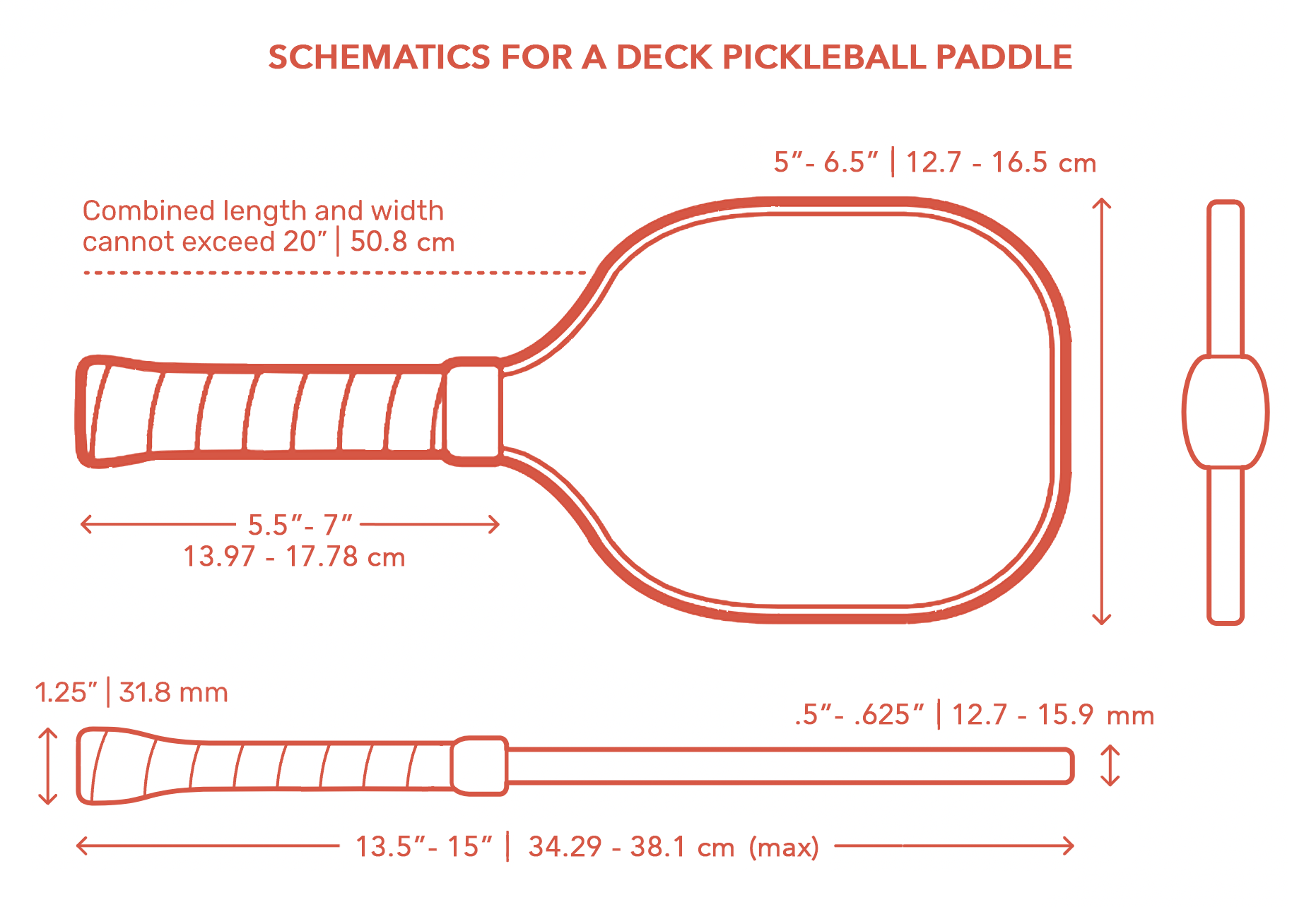
Playing deck pickleball can significantly enhance a player’s pickleball skills, particularly in the areas of quick reflexes and hand-eye coordination. The specialized paddles and unique design of the deck itself are tailored to help players refine specific aspects of their game. These paddles are smaller than regular ones and may feature different surface textures to boost control, power, or accuracy.
Here are some three main ways that deck pickleball can help improve your pickleball game:
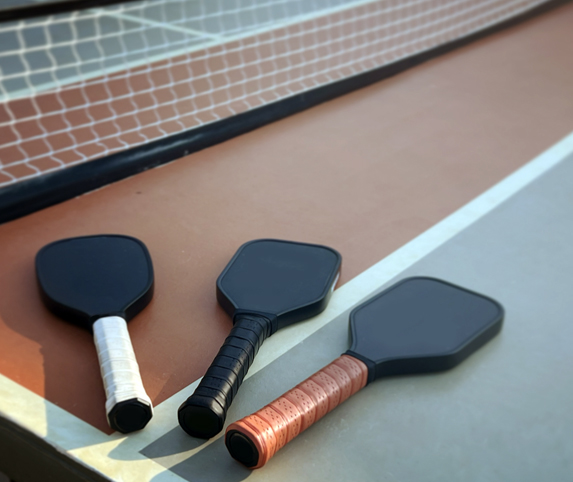
Smaller Paddles: Deck pickleball paddles are smaller than standard pickleball paddles, which makes it more challenging to hit the ball. This requires players to concentrate on precision, thereby improving hand-eye coordination. Practicing with a smaller paddle can make playing with a larger paddle easier, as the increased surface area allows for better contact with the ball. These paddles are also excellent for drills and practice sessions on a standard pickleball court, helping beginners enhance their fundamentals and advanced players refine specific skills.
Smaller Playing Surface: The deck used in deck pickleball is exactly 1/10th the size of a standard pickleball court, which demands well-placed and accurate shots. The smaller playing area helps players develop a better feel for controlling spin and ball placement, skills that are crucial in pickleball.
Close Proximity to the Action: Similar to table tennis, deck pickleball is played in close proximity to the opponent across the net. The fast-paced nature of the game leads to quick, exciting points. This fast pace helps players focus on control and wrist movement, which can be particularly beneficial for improving net play or volleying during standard pickleball matches.
OUR GALLERY
Lorem ipsum dolor sit amet, consectetur adipiscing elit. Ut elit tellus, luctus nec ullamcorper.